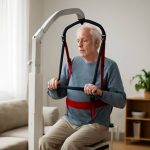
The modern healthcare landscape demands tools that prioritize both patient dignity and caregiver safety. For facilities and home care environments where individuals retain partial weight-bearing ability, the sit to stand lift for sale represents a pivotal investment in functional mobility. These devices, specifically engineered to assist patients in moving from a seated to a standing position, bridge a critical gap between total dependency and full independence. Unlike full-body sling lifts, these units require active participation from the patient, fostering muscle engagement and psychological well-being. The technology utilizes a supportive knee pad, a stable base, and a gentle lifting mechanism that guides the user through a natural standing motion. This approach not only reduces the risk of skin shear and discomfort but also maintains the user’s lower body strength. For caregivers, the benefits are equally profound. The mechanical advantage provided by these lifts eliminates dangerous manual lifting, drastically cutting the incidence of back injuries and chronic strain. When searching for a reliable sit to stand lift for sale, understanding the nuances of frame construction, weight capacity, and floor-base mobility is crucial. These devices are not one-size-fits-all; they must align with the specific physical dimensions of the user and the spatial constraints of the environment, whether a narrow bathroom doorway or a crowded hospital room.
The Mechanics of Safe Transfer: Why Active Patient Participation Matters
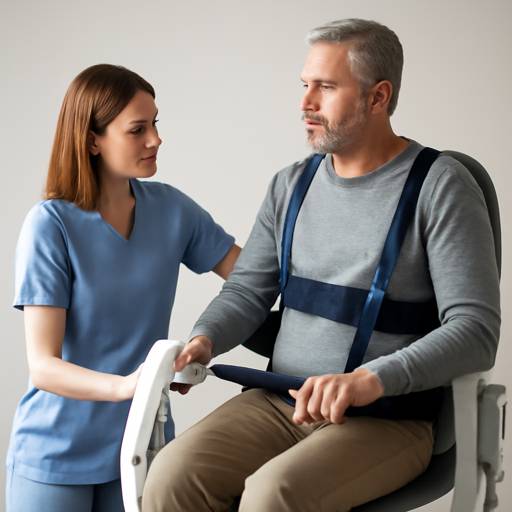
The core philosophy behind the sit-to-stand lift is the preservation of the patient’s own kinetic chain. Many individuals who have undergone hip or knee replacement surgery, or those dealing with progressive conditions like multiple sclerosis, retain the ability to generate leg strength but lack the stability or confidence to stand independently. A standard sling lift, while effective for non-weight-bearing patients, can encourage complete passivity. In contrast, a sit-to-stand device engages the patient’s core and lower extremities. The design includes a specialized sling or vest that wraps around the patient’s back, not under the thighs. As the lift arm rises, the patient naturally pushes through their feet to assume a standing posture. This active participation is clinically significant. Studies indicate that consistent use of these lifts can slow muscle atrophy, improve circulation, and enhance respiratory function. From a biomechanical perspective, the sit to stand lift for sale mimics the natural momentum of rising from a chair, which is less jarring than being hoisted from a horizontal position. Caregivers must be trained to recognize the critical role of proper foot placement. The patient’s feet should be flat on the base plate, slightly back, to ensure the center of gravity aligns with the lift’s pivot point. Furthermore, the knee pad must be adjusted to apply gentle pressure against the shins, providing a fulcrum that prevents the patient from sliding forward. Real-world case studies from rehabilitation hospitals show a marked decrease in fall incidents during transfers when sit-to-stand protocols are used, compared to manual two-person assists. This mechanical guidance provides a safe safety net that allows caregivers to focus on the patient’s balance and orientation rather than on brute force.
Key Features and Configurations in Modern Sit-to-Stand Equipment
When evaluating a sit to stand lift for sale, the diversity in features can be overwhelming, but understanding them is essential for making a cost-effective and clinically appropriate decision. The first major differentiator is the lift mechanism: electric versus hydraulic. Electric lifts, powered by rechargeable batteries, offer smooth, controlled ascent and descent with minimal caregiver effort. They are ideal for facilities with frequent transfer cycles. Hydraulic models, while often lighter and less expensive, require manual pumping, which can be fatiguing during multiple transfers. Another critical feature is the spreadable base. Modern lifts come with either manual or power-operated leg openers. A power-open base is a significant ergonomic advantage, allowing the caregiver to widen the base around a wheelchair or chair without bending over. This reduces the risk of back strain and speeds up the transfer process. Weight capacity is another non-negotiable factor. Standard bariatric models can support up to 700 pounds, while standard units typically handle 350 to 450 pounds. The patient sling or vest compatibility is equally important. Some units use a universal sling system, while others require proprietary designs. Look for models that offer quick-release clips and washable, breathable fabric for hygiene. A real-world example involves a skilled nursing facility that invested in a fleet of sit-to-stand lifts with integrated digital weight scales. This allowed nurses to record patient weight simultaneously with the transfer, streamlining data collection and reducing the need for separate weighing procedures. The casters and floor locks also deserve scrutiny. Large, swiveling casters improve maneuverability on carpet and over door thresholds, while durable floor locks ensure the lift remains stable during the transfer moment.
Real-World Applications and Caregiver Training Protocols
Integrating a sit to stand lift for sale into a clinical or home setting goes beyond mere purchase; it requires a comprehensive approach to usage protocols. One compelling sub-topic is the reduction of workplace injuries in long-term care facilities. Consider a case study from a mid-sized assisted living facility in Ohio. Prior to adopting sit-to-stand lifts, the facility reported an average of 12 caregiver back strain incidents per year, resulting in lost workdays and high workers’ compensation claims. After implementing a mandatory lift policy for all standing transfers and purchasing a fleet of sit to stand lift for sale units, the injury rate dropped by over 80% in the first 18 months. The key to this success was not just the equipment, but the training. Staff underwent a rigorous half-day certification program focusing on proper sling application, base positioning, and verbal cueing of the patient. Another real-world example involves home health aides working with elderly patients with Parkinson’s disease. The freezing episodes common in Parkinson’s make manual standing transfers dangerous. By using a sit-to-stand lift, the aide could provide the initial momentum needed to overcome the freezing, allowing the patient to complete the standing motion safely. The psychological impact was also notable; patients reported feeling more in control and less like a burden. For caregivers, the reduction in physical strain meant they could focus on the emotional support and encouragement the patient needed, rather than worrying about their own physical limits. This holistic benefit—reducing injury while promoting patient autonomy—is the defining value proposition of these devices. Furthermore, facilities that incorporate these lifts into their daily routine often see improvements in patient mobilization rates, leading to fewer pressure ulcers and better bowel function, as patients are more comfortable being moved to a toilet or stand to eat. The initial investment in a sit to stand lift for sale pays dividends through decreased staff turnover, improved patient outcomes, and a safer therapeutic environment.