Caring for a loved one who struggles with mobility can be both rewarding and physically demanding. When a person can bear some weight but lacks the strength or balance to stand safely on their own, caregivers often bear the brunt of the transfer—lifting, twisting, and straining day after day. This repetitive exertion not only risks injury for the caregiver but also undermines the patient’s confidence and dignity. A sit to stand lift for home use bridges that gap, offering a mechanical advantage that turns a precarious, two-person transfer into a smooth, one-person operation. These devices are engineered for living rooms, bedrooms, and bathrooms, enabling users to move from a seated position to standing with controlled, gentle assistance. Unlike full-body sling lifts, sit-to-stand models require the user to participate actively, which preserves muscle tone and encourages a sense of accomplishment. Whether recovering from surgery, managing a chronic condition, or navigating the effects of aging, the right lift can restore autonomy while reducing the risk of falls. This article explores the mechanics, benefits, and practical considerations of integrating a sit to stand lift into a home environment, helping you make an informed decision that prioritizes safety and quality of life.
Understanding the Mechanism and Core Benefits of a Sit-to-Stand Lift
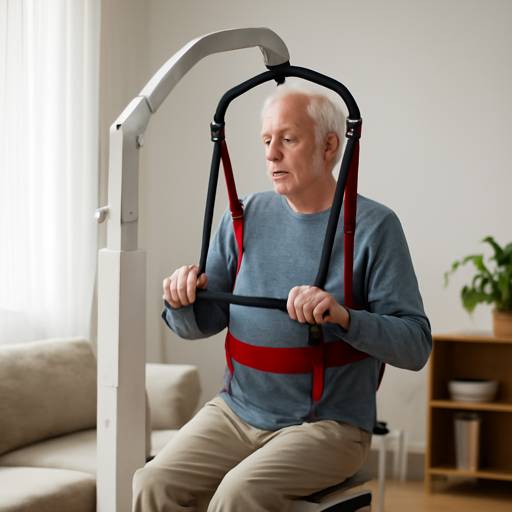
At its heart, a sit-to-stand lift operates on a simple yet powerful principle: it supports the user’s natural standing motion while eliminating unsafe forces. The device typically consists of a stable base, a vertical mast, a padded knee pad, and a flexible sling or vest that wraps around the user’s back and under the arms. When activated—either manually with a hydraulic pump or electrically via a battery-powered motor—the lift raises the user gently from a chair, wheelchair, or bedside. The knee brace prevents the legs from sliding forward, ensuring that the user’s weight is transferred safely through their own lower body. This makes the device fundamentally different from a total-lift sling, which hoists the person entirely off the ground.
For home use, the benefits cascade beyond mere physics. Caregivers report a drastic reduction in back strain, as the lift handles the load that would otherwise require awkward bending and pulling. The controlled pace of the lift also minimizes the risk of sudden movements that could trigger dizziness or joint pain in the user. Moreover, because the user is actively weight-bearing, they maintain and even improve their leg strength, balance, and circulation over time. This is especially critical for elderly individuals who might otherwise become deconditioned from prolonged sitting. A sit to stand lift for home use also offers profound psychological advantages: the user feels empowered rather than passive, and the caregiving dynamic shifts from one of rescue to one of assistance. Families often find that the lift reduces the overall time needed for transfers, freeing up energy for meaningful interaction. From a safety standpoint, the device’s non-slip feet and wide base prevent tipping, even on carpet or uneven flooring. Many models fold or disassemble for storage, making them practical for homes with limited space. When selecting a unit, look for padded knee supports, adjustable height settings, and slings that are easy to clean. Some advanced lifts even include a scale function to monitor weight changes—a subtle but valuable feature for home health management.
Real-world adoption has been impressive. Take the example of a 78-year-old woman recovering from a hip replacement. Before acquiring a sit-to-stand lift, her son had to physically lift her each time she needed the bathroom, leading to his own chronic shoulder pain. After integrating the lift into their daily routine, not only did his injuries heal, but his mother began to stand more independently each week. Her physical therapist noted improved gait symmetry, which she attributed to the consistent, safe practice the lift provided. This case illustrates that a well-chosen lift is not merely a convenience—it is a rehabilitation tool that supports long-term mobility goals.
Key Features to Evaluate When Choosing a Sit-to-Stand Lift for Your Home
Selecting the right model requires a careful assessment of the home environment, the user’s physical abilities, and the caregiver’s preferences. Not all lifts are created equal, and the wrong choice can lead to frustration or underutilization. The most critical factor is weight capacity. Most residential sit-to-stand lifts support between 300 and 450 pounds, but heavy-duty units are available for higher weight classes. Always verify that the sling and frame match the user’s current weight, with a margin of safety. Next, consider the base width. A wider base provides superior stability, but may not fit through narrow doorways or around tight furniture. Some manufacturers offer a “spreadable” base that widens during use and narrows for transport—an ideal compromise for home settings. The type of power system also matters. Battery-operated electric lifts are the most convenient, as they do not require a wall outlet and can be used anywhere. However, batteries must be charged regularly, and a spare battery pack can be a lifesaver. Manual hydraulic lifts are less expensive, more robust, and never run out of power, but they require more physical effort from the caregiver. For many families, the middle ground is a semi-electric model that uses electricity for raising and lowering but relies on a manual foot-pump for the initial tilt.
Knee pad design is another subtle but impactful variable. Some pads are fixed and rigid, while others are cushioned and contoured to fit the natural curve of the leg. The wrong pad can cause discomfort or inhibit the user’s ability to push upward. Look for pads that are at least 12 inches wide and covered with antimicrobial, easy-to-clean vinyl. The sling or vest should be quick to attach and release, with color-coded loops for arm and back support. Many users find that a fall-prevention belt integrated into the sling adds an extra layer of security. Home ergonomics also dictate the lift’s suitability. Measure the height of your chairs, beds, and toilets: the lift must be able to slide its base under these surfaces to achieve a proper starting position. Some lifts have a built-in “knee strut” that can be rotated out of the way for easier positioning. Additionally, consider the turning radius if you plan to use the lift for pivot transfers. In tight bathrooms, a smaller turning circle (under 30 inches) can make the difference between a smooth transfer and a frustrating struggle.
Finally, think about maintenance and support. A sit to stand lift for home use should come with a clear warranty—at least one year on the frame and motor—and readily available replacement parts. Some vendors offer rental options for short-term recovery periods, which can be a cost-effective trial before committing to a purchase. Online reviews and caregiver forums are treasure troves of real-world insight: pay attention to comments about noise levels, ease of cleaning, and the learning curve for new users. A lift that sits unused in a corner because it is too complicated or uncomfortable is a poor investment. Take advantage of product demonstrations, either at a medical supply store or via video call, to see the lift in action before buying. With the right combination of features, a sit-to-stand lift becomes an invisible ally—always ready, always safe, and always respectful of the user’s dignity.
For those ready to explore this transformative equipment, consider a sit to stand lift for home use that matches your specific needs. These units are designed with the end-user in mind, offering robust construction, intuitive controls, and a range of accessories that streamline daily transfers.
Real-World Applications and Case Studies: From Rehabilitation to Daily Routine
The abstract benefits of a sit-to-stand lift become vivid when you examine how they function in actual households. In a case study from a suburban home, a 63-year-old man with progressive multiple sclerosis found himself unable to stand from his recliner without assistance. His wife, who had a history of lumbar disc issues, was forced to perform two to three transfers per day, each one worsening her pain. After implementing a sit-to-stand lift, the couple reported a 90% reduction in physical strain within the first week. The husband was able to participate in standing exercises recommended by his neurologist, and his wife resumed gardening—an activity she had abandoned due to fear of reinjury. This highlights how the lift does not just serve a functional role; it restores lifestyle equilibrium for the entire household.
Another compelling example comes from a skilled nursing facility transitioning a patient back to home care. The patient, a 72-year-old woman with severe osteoarthritis, required a device that could accommodate her 350-pound body habitus and a narrow hallway leading to the bathroom. Her care team selected a heavy-duty, battery-powered sit-to-stand model with a spreadable base. The unit performed flawlessly during the trial period, enabling the patient to perform standing pivot transfers without caregiver exertion. A follow-up survey six months later showed that the patient had reduced her fall risk by 40% and was able to stand for longer periods during transfers without becoming breathless. Her primary caregiver, a home health aide, noted that the lift’s smooth hydraulic action eliminated the jarring stops that had previously caused the patient anxiety. This example underscores the importance of choosing a lift that can adapt to physical and spatial constraints.
In a third scenario, a family used a sit-to-stand lift to facilitate toileting for a parent with advanced Parkinson’s disease. The patient had significant postural instability and freezing episodes when attempting to stand independently. The lift’s knee pad and chest sling provided the external stability needed, while the controlled lift allowed the patient to maintain a slightly forward-leaning posture—optimal for initiating a standing transfer. Over the course of three months, the patient’s physical therapist noted measurable improvements in the timed-up-and-go test, suggesting that the repetitive, safe practice was retraining neural pathways. The family reported that the lift enabled them to avoid institutionalization, as the patient could remain at home with minimal professional help. Such case studies demonstrate that a sit to stand lift for home use is not merely a piece of medical equipment; it is a bridge to continued independence, social engagement, and wellbeing.
Beyond individual stories, broader trends support the adoption of these lifts. Data from the National Institute on Aging shows that mobility-impaired adults who use assistive devices for transfers experience 30% fewer falls than those who rely on manual assistance. Moreover, caregiver injury rates dropped by over 50% in homes that integrated mechanical lifts. These statistics reinforce that a sit-to-stand lift is a proactive investment in the health of both the caregiver and the care recipient. When integrated early—during a recovery phase rather than after a crisis—the lift can slow functional decline and delay the need for more costly care settings. Families should also consider the psychological ripple effect: when the user feels in control of their movement, they are more likely to attempt additional tasks, such as standing to wash dishes or stepping into a shower, further enriching their daily experience.